The Future of Web3 Wallets: Smart Accounts & Account Abstraction
Knackroot
12/3/2025
Introduction
The Web3 ecosystem has long struggled with user experience challenges that prevent mainstream adoption. Complex seed phrases, gas fee management, and the risk of irreversible mistakes create significant barriers for new users. Account Abstraction (AA) and Smart Accounts represent a paradigm shift in how users interact with blockchain networks, transforming wallets from simple key-storage tools into programmable, intelligent accounts that can automate transactions, recover access, and provide a seamless user experience comparable to Web2 applications.
“Account abstraction doesn't just improve wallets—it reimagines what's possible when accounts become programmable.”
The Evolution from EOAs to Smart Accounts
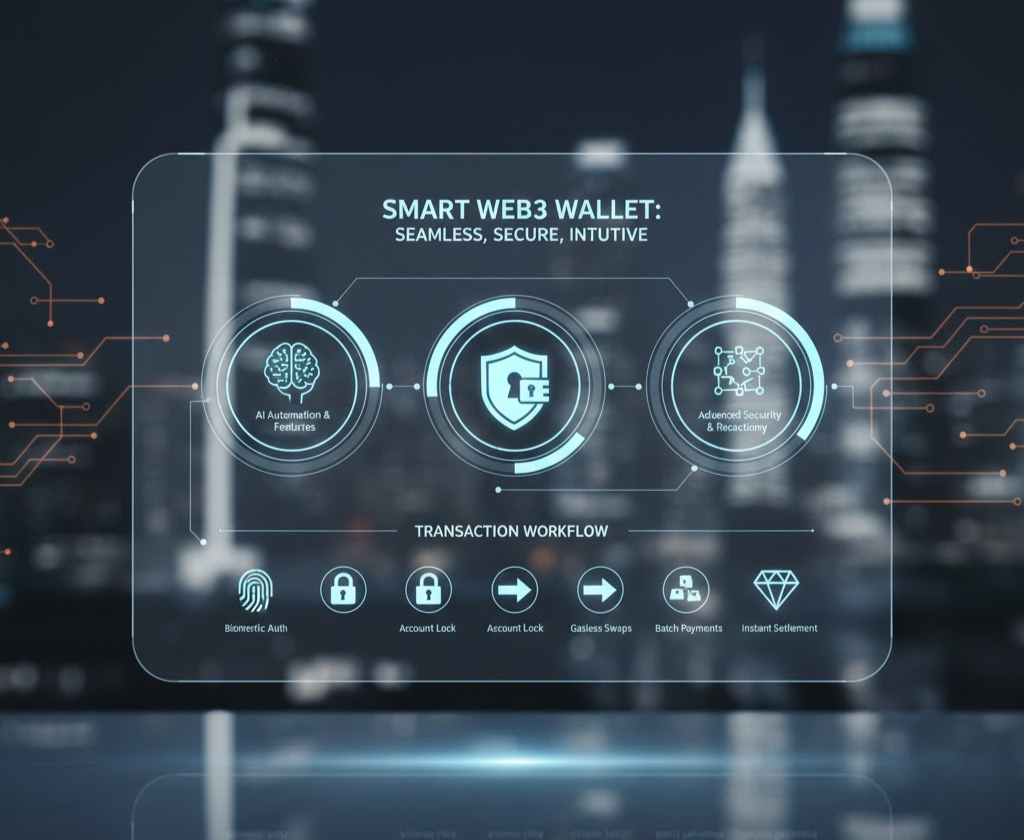
Traditional Ethereum wallets are Externally Owned Accounts (EOAs) controlled by private keys. While simple, they have critical limitations: no recovery mechanisms, inability to batch transactions, mandatory gas payments in native tokens, and no customizable security rules. Smart Accounts, enabled by account abstraction standards like ERC-4337, transform wallets into smart contracts with programmable logic. This allows for features like social recovery, gasless transactions, transaction batching, spending limits, and multi-signature approvals—all while maintaining self-custody and decentralization.
Key Features of Smart Accounts
Account abstraction unlocks a new generation of wallet capabilities that address the most critical pain points in Web3 user experience:
Real-World Applications
Smart accounts and account abstraction are already being deployed across various Web3 use cases, fundamentally improving how users interact with decentralized applications:
Challenges and Considerations
While account abstraction represents a major leap forward, several challenges must be addressed for widespread adoption:
The Road Ahead
The future of Web3 wallets is programmable, intelligent, and user-centric. As account abstraction infrastructure matures, we'll see wallets evolve into personal AI agents that can execute complex strategies, negotiate optimal transaction paths, and interact autonomously with protocols on behalf of users. Integration with zero-knowledge proofs will enable privacy-preserving smart accounts, while cross-chain account abstraction will create unified identities across the multi-chain ecosystem. Major wallet providers, Layer-2 networks, and Ethereum itself are investing heavily in account abstraction, signaling that smart accounts will become the default standard. The ultimate vision: Web3 wallets that are as intuitive as Web2 apps, but with the added benefits of self-custody, programmability, and true digital ownership.
Conclusion
Account abstraction and smart accounts represent the most significant evolution in Web3 user experience since the invention of the wallet itself. By transforming accounts from simple key pairs into programmable smart contracts, we unlock features that make blockchain technology accessible to billions of users. Social recovery eliminates the terror of lost keys, gasless transactions remove friction, and programmable security policies provide enterprise-grade protection. While challenges around infrastructure, security, and education remain, the trajectory is clear: the future of Web3 belongs to smart accounts. As this technology matures, the distinction between Web2 and Web3 user experience will blur, ushering in an era where decentralized applications are as easy to use as their centralized counterparts—but with the added power of true ownership and programmable money.
Want to learn more about Blockchain or AI?
Explore more blogs and stay updated with the latest in Web3, AI, and emerging technologies.
Read More Blogs