Stablecoins as Infrastructure: The Backbone of DeFi, Payments & Tokenisation
Knackroot
11/6/2025
Introduction
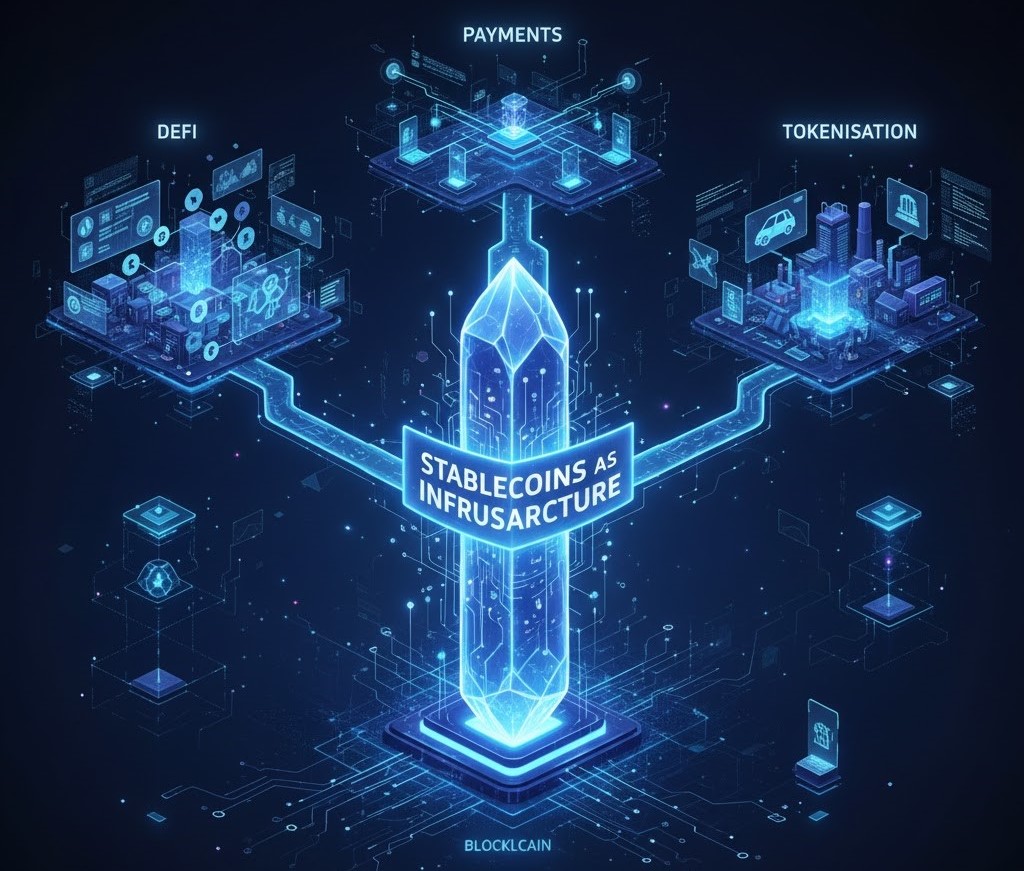
The blockchain industry has evolved from speculative trading to powering real-world financial systems. At the heart of this transformation are stablecoins — digital assets designed to maintain a stable value, typically pegged to fiat currencies or commodities. While once viewed as a simple bridge between crypto and traditional finance, stablecoins have become the essential infrastructure underpinning decentralized finance (DeFi), global payments, and asset tokenisation. They enable frictionless transactions, liquidity management, and programmable money — forming the foundation of the next-generation digital economy.
“Stablecoins are no longer just crypto’s safe haven — they are the operating system of decentralized finance.”
Why Stablecoins Are Foundational to the Digital Economy
Traditional cryptocurrencies like Bitcoin and Ethereum introduced decentralization but suffered from high volatility, making them impractical for everyday financial use. Stablecoins solve this problem by anchoring their value to stable assets like the US dollar, creating a reliable medium of exchange and unit of account. Their stability, combined with blockchain’s transparency and programmability, has made them indispensable for DeFi platforms, remittance networks, and digital asset ecosystems.
The Core Roles of Stablecoins in Modern Blockchain Infrastructure
Stablecoins now serve as the financial ‘plumbing’ of the digital economy — facilitating settlement, liquidity, and tokenized value transfer. Their influence spans across multiple layers of blockchain activity:
Real-World Applications
From institutional finance to everyday payments, stablecoins are rapidly being adopted across industries as programmable, trust-minimized money:
Challenges and Considerations
Despite their growing importance, stablecoins face technological, regulatory, and systemic challenges that must be addressed for sustainable growth:
The Future of Stablecoins: From Utility to Universal Infrastructure
As blockchain adoption accelerates, stablecoins will evolve beyond financial tools into universal digital infrastructure. Expect multi-chain interoperability, CBDC integration, and real-world yield-bearing stablecoins that blend DeFi returns with regulatory compliance. Governments and corporations are already piloting programmable stablecoins for automated settlements, payroll systems, and tokenised treasury management. Over time, stablecoins will underpin the broader digital asset economy — serving as the default settlement medium across both decentralized and institutional finance.
Conclusion
Stablecoins have become the backbone of blockchain’s financial ecosystem — transforming how money moves, how assets are traded, and how trust is established. Their role has shifted from a temporary store of value to the essential infrastructure of decentralized finance, payments, and tokenisation. As innovation continues, the most successful projects will combine the transparency of blockchain with the stability of traditional finance — realizing the ultimate vision of borderless, programmable money that powers a truly global economy.
Want to learn more about Blockchain or AI?
Explore more blogs and stay updated with the latest in Web3, AI, and emerging technologies.
Read More Blogs