The Rise of RAG: Enhancing LLMs with External Knowledge
Knackroot
8/14/2025
Introduction
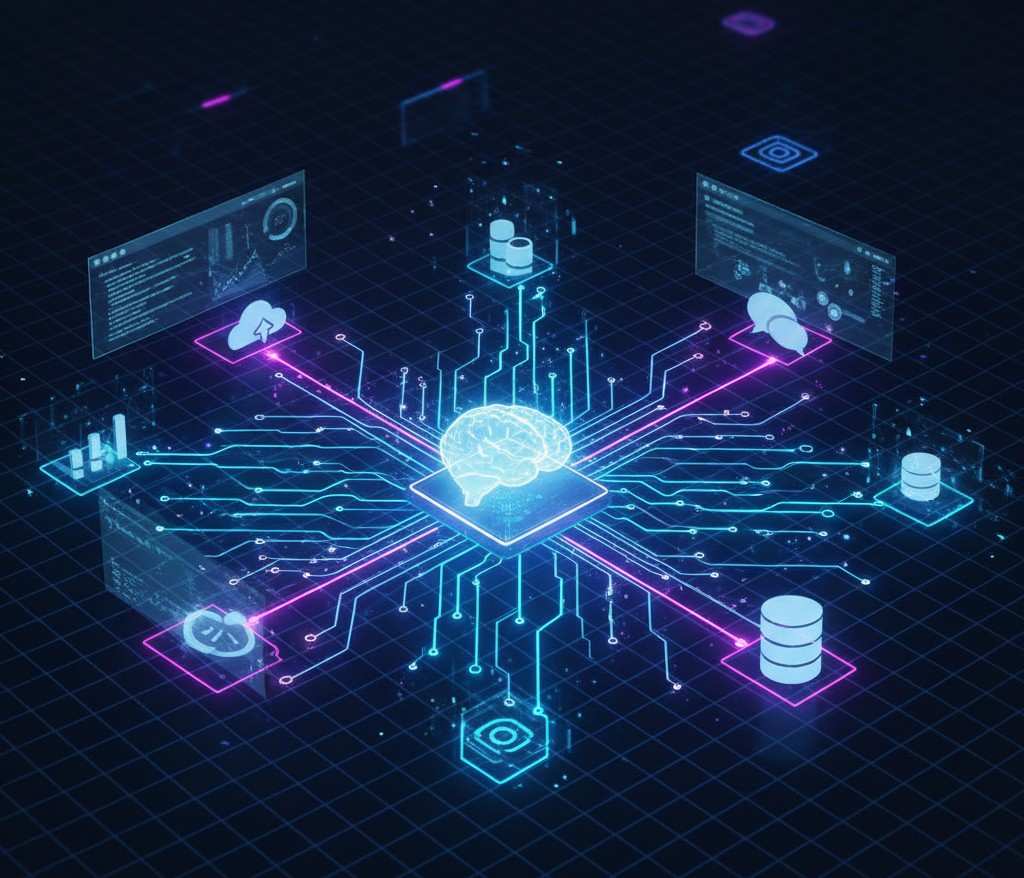
Large Language Models (LLMs) have taken the world by storm, demonstrating incredible capabilities in generating human-like text. However, they suffer from a fundamental limitation: their knowledge is static and limited to their pre-trained data. This often leads to 'hallucinations,' where the model fabricates information or provides outdated answers. Enter Retrieval-Augmented Generation (RAG)—a revolutionary framework that is changing the game by connecting LLMs to external, up-to-date, and authoritative knowledge bases, effectively giving them a 'digital library' to consult before answering.
“RAG is the bridge between a language model's imagination and the factual world.”
Why RAG is Essential for LLMs
Imagine you ask an expert a question. Instead of relying solely on their memory, they consult a library of the latest research and documents to give you a precise, well-referenced answer. RAG operates on this same principle. It enhances the LLM's output by retrieving relevant information from an external database and using that data to ground the generated response. This approach mitigates common issues like factual inaccuracies and a lack of transparency, making AI systems more trustworthy and useful for real-world applications.
How RAG Works: The Key Components
A RAG system is a multi-step process with three core components that work in harmony to produce accurate and relevant responses:
Real-World Applications
RAG is being adopted across various industries to solve complex problems where accuracy and up-to-date information are critical:
Challenges and Considerations
While RAG is a powerful tool, its implementation is not without challenges. Businesses must carefully consider these factors:
RAG vs. Fine-Tuning: The Future of LLM Customization
RAG is often seen as an alternative to fine-tuning, but they serve different purposes. Fine-tuning modifies the core LLM to learn new skills or styles from a specialized dataset. In contrast, RAG provides a way to give the model external knowledge without changing its core parameters. For many use cases, RAG is more cost-effective and easier to maintain because you don't have to retrain the entire model when new information becomes available. Going forward, the most advanced systems will likely use a combination of both—a fine-tuned model for tone and style, and a RAG system for factual accuracy and up-to-the-minute information.
Conclusion
Retrieval-Augmented Generation represents a significant leap forward in making AI more reliable and useful. By allowing LLMs to look up and reference external knowledge, RAG effectively solves the problems of factual inaccuracies and static knowledge. It transforms a powerful but limited generative tool into an authoritative and transparent one. As organizations continue to build AI-powered applications, RAG will become a foundational component, enabling them to leverage the power of LLMs while ensuring their systems are grounded in truth, ready to tackle the complexities of the real world.
Want to learn more about Blockchain or AI?
Explore more blogs and stay updated with the latest in Web3, AI, and emerging technologies.
Read More Blogs